Go back to all articles

Ecodesign core to Premier Tech Water and Environment

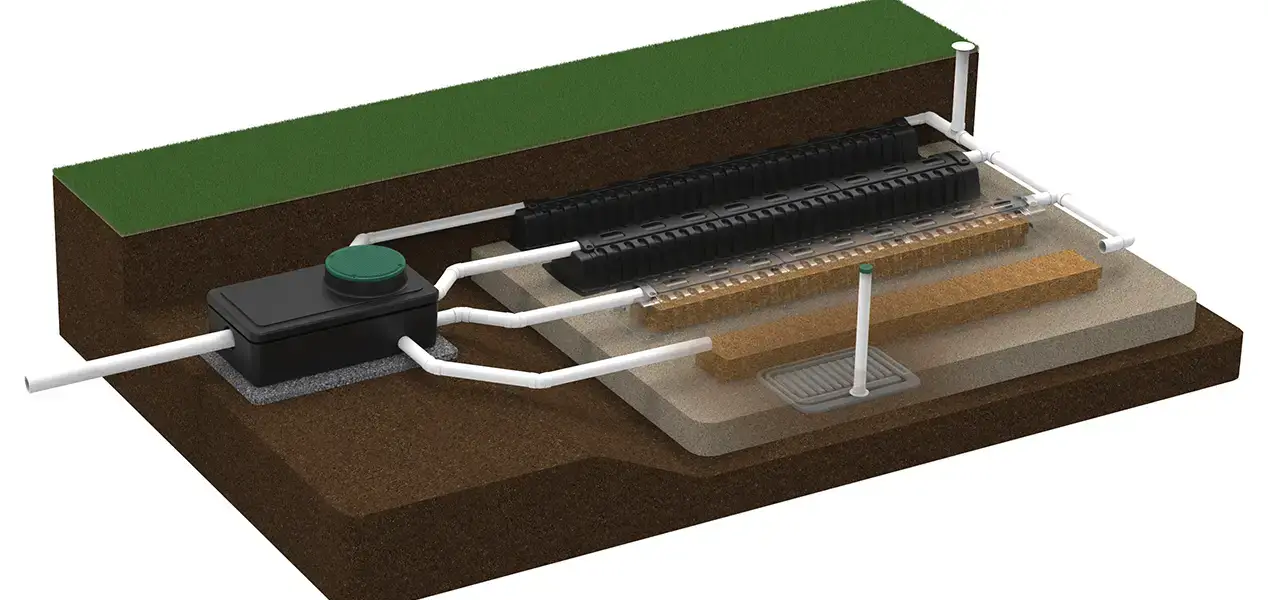
Last year, Premier Tech Water and Environment launched the Ecoflo® linear biofilter, an innovative solution that combines wastewater treatment and dispersal.

Developed through an ecodesign approach, this technology is the result of in-depth analysis, strengthened by close collaboration with key stakeholders in the field. This collaboration helped identify the limitations of existing systems, guiding the design and development of this new commercial offer.

The goal was to design a system that meets market needs while supporting sustainability initiatives, by considering environmental, financial and social aspects throughout the life cycle of the Ecoflo® linear biofilter.

 The goal was to design a system that meets market needs while supporting sustainability initiatives, by considering environmental, financial and social aspects throughout the life cycle of the Ecoflo® linear biofilter. 
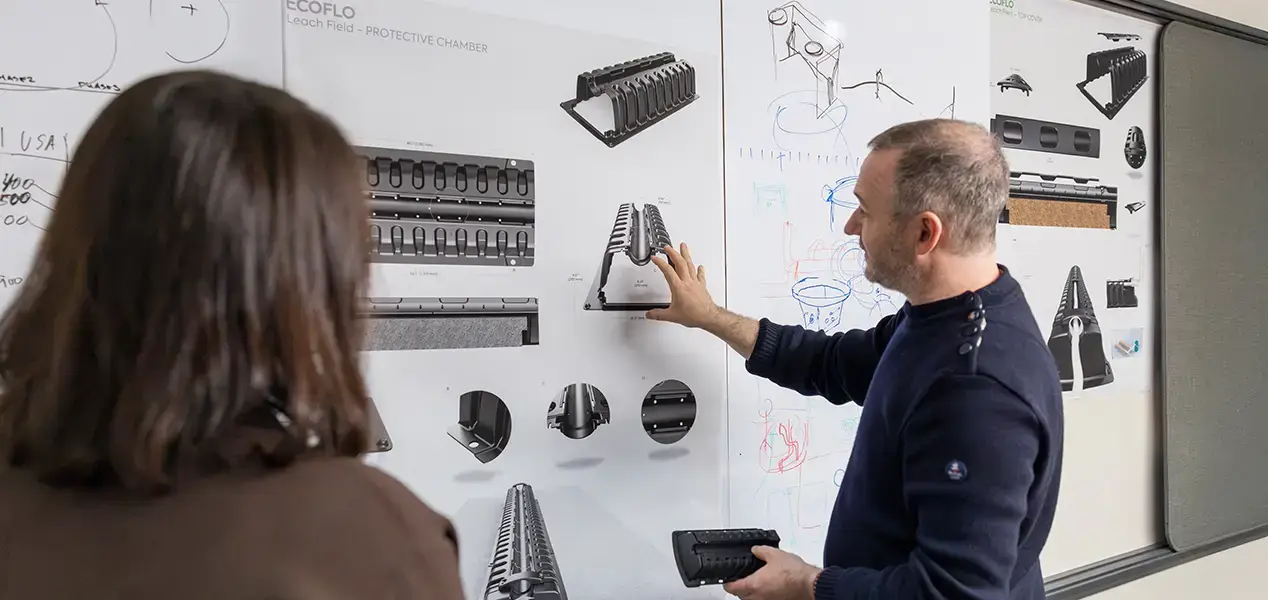
Nearly 5 000 wastewater systems were installed during the first year on the market. The system also received the National Sanitation Foundation (NSF) certification, unlocking new development opportunities in the American market. This milestone marks just the beginning of a broader journey, as our innovation process continues to evolve.

This initial phase of ecodesign and commercialization allowed us to validate technical aspects and strategic decisions — paving the way for the next stage of development.

The product development team thus initiated a second design phase aimed at further reducing the environmental footprint of the system while maintaining, or even enhancing, its competitiveness and technical performance.

Rethinking product design and production in two phases

During the initial phase, we focused on accelerating development and conducting field tests. We therefore incorporated thermoforming into the design of the first product version — a strategic decision that enabled the use of lower-cost moulds and faster time-to-market. Though temporary, the solution allowed us to validate system performance and gather valuable feedback from the field.

In the second phase, our development team focused on rethinking the system’s design and production to reduce costs, shorten installation time and improve its environmental footprint. Adopting an injection moulding process represented a key opportunity for this type of application.

The life cycle analysis conducted on the first version of the Ecoflo® linear biofilter also revealed additional improvement opportunities, which we incorporated into the second version:

  • A reduced number of components — from six distinct parts in the first version to three in the second —, reducing assembly operations, hardware requirements and the risk of installation errors.
  • User-friendly assembly with screwless interlocking parts — which facilitates and improves the experience of users and installers, who no longer need tools.
  • Optimized protective chambers stacking through a redesigned layout, allowing more units per load and reducing the environmental footprint associated with logistics and transportation.
  • Monomaterial and modular approach, making the product easier to repair and recycle at the end of its life cycle.

The comparative analysis of the two versions of the Ecoflo® linear biofilter highlighted the positive impacts of these changes, both by mitigating the environmental footprint — with a 20% reduction in carbon emissions — and by expanding into new markets.

This also confirmed the relevance of the ecodesign process in developing high-performance, competitive and sustainable products.

*This story is from the Premier Tech Report 2025.

Read the complete 2025 sustainability report

Over the past year, Premier Tech signed the United Nations Global Compact, marking a new milestone in its ongoing journey toward Sustainability and beyond. This report highlights the progress, results, and stories that shaped our sustainability efforts throughout the year.