Go back to all articles

Caring for the organic resource

Over the past year, our goal was to define a reduction target for our biogenic emissions related to peat bog management and operations. Setting this target required thorough analyses and alignment on multiple levels.

To inform our reflection and guide our actions, we closely monitored the evolution of global standards for calculating biogenic emissions, proactively assessing their development.

We also conducted analyses related to these aspects, collected the necessary scientific data and assessed the footprint and performance of this organic resource using life cycle analysis (LCA) frameworks. This allows us to reaffirm not only the value of sphagnum peat moss, but also the need to ensure its responsible management for future generations, as we have been doing for many decades.

It is by reflecting on our past achievements with the long term in mind that we have clearly outlined our intentions moving forward.

 This allows us to reaffirm not only the value of sphagnum peat moss, but also the need to ensure its responsible management for future generations, as we have been doing for many decades. 

A unique organic material

Peat moss is core to the performance of growing media, which in turn contributes to addressing social challenges such as food safety and human well-being.

Its unique properties — including water and nutrient retention, soil aeration, compatibility with biostimulants and biocontrols, and phytosanitary functions — set sphagnum peat moss apart from other materials.

We use this natural resource responsibly, guided by a long-term vision and a commitment to making a positive impact within the environments in which we operate. Three pillars guide our actions and decisions: responsibility, longevity and contribution.

Responsibility reflects our commitment to rigorous resource management, to the continuous improvement of harvesting as well as restoration methods through investments and innovation, and to open communication with local communities.

Longevity is about acting today with the future in mind, ensuring the longevity of the resource for future generations.

Contribution includes participating in the evolution of the industry by collaborating with the scientific community and its stakeholders. It also means investing in the innovation and development of future technologies and materials, as well as offering a portfolio of impactful products that help feed a growing global population and beautify the world.

A constantly evolving global context

As the global context constantly evolves, the requirements for reducing greenhouse gas (GHG) emissions, protecting biodiversity and restoring ecosystems are being strengthened.

This now plays an increasingly important role in international commitments and public policies — such as the Paris Agreement, the Kunming-Montreal Global Biodiversity Framework, and Canada’s 2030 Nature Strategy.

In this constantly evolving context, we are invited to rethink our commitment while redefining and strengthening our actions to tackle current and future environmental challenges.

Given our long-standing commitment to responsible peat bog management and a leadership position within the horticultural peat industry, these are topics to which we intend to add our voice.

 In this constantly evolving context, we are invited to rethink our commitment while redefining and strengthening our actions to tackle current and future environmental challenges. 

Ambitious and specific targets

Driven by our ambition for continuous progress, we closely monitor developments in science and issues related to biogenic emissions. We therefore ensure that we remain actively engaged and aligned with the various frameworks for biodiversity protection and the maintenance of ecosystem services.

Building on our leadership position within the industry and the efforts undertaken since the 1990s, we have set three targets this year for our peat bog operations.

Our ambition is to commit even more to peat bog restoration by increasing the proportion of restored sites and shortening timeframes between closure and restoration, thereby significantly reducing GHG emissions from our sites after harvesting.

Target 1

Increase the area of peat bogs under ecological restoration from 1 700 hectares to 2 700 hectares, representing 70% of post-production areas — by 2030.

Target 2

Ensure that 100% of closed sites are in restoration within three years of their closure — as of 2030.

Target 3

Reduce GHG emissions from our post-production sites by 50% — by 2045.

A long-standing commitment to ecological restoration

Several restoration approaches can be considered when harvesting operations on a peat bog are completed. However, they are not all equal from an environmental standpoint.

Some methods aim to reestablish a plant cover without restoring the original properties of the peat bog — which allows managing GHG emissions but has limited impact on biodiversity.

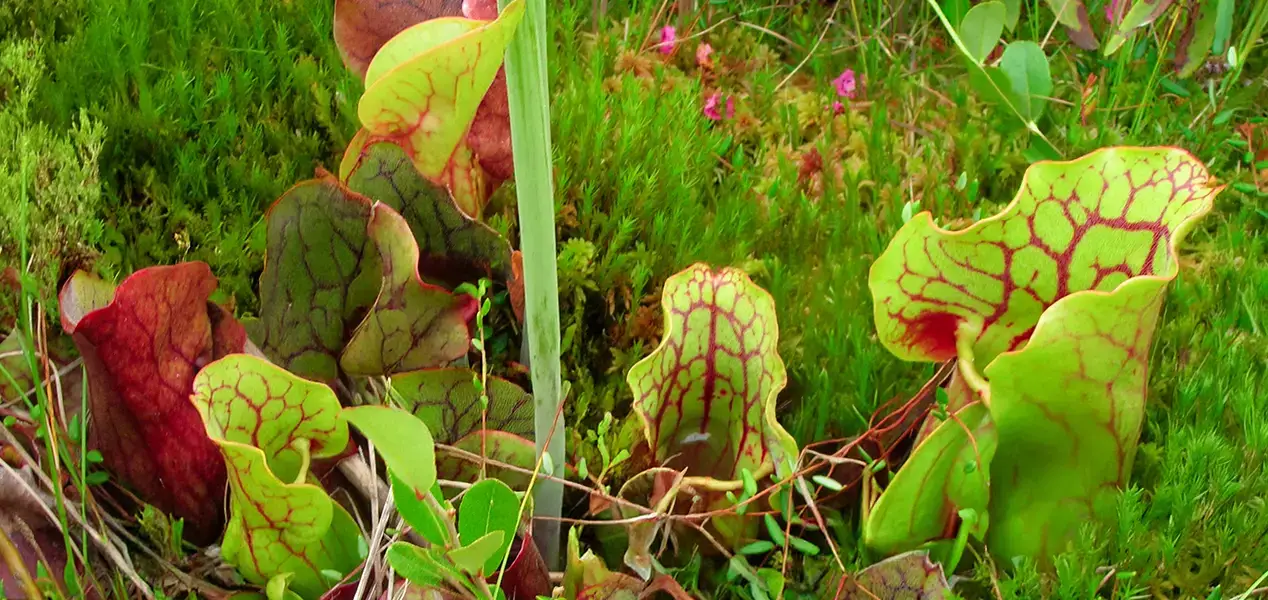
Other methods aim to create the necessary conditions to restore the key ecosystem functions of a peat bog. Among these, ecological restoration by moss layer transfer technique (MLTT) stands out as it involves the active reintegration of peat bog plant species and hydrologic management. This method helps reduce GHG emissions, while enabling the gradual return of biodiversity.

This includes enhancing water retention and carbon sequestration, and enabling the return of mosses — typical wetland species —, insects, birds and numerous other species that inhabit peat bogs.

 Among these, ecological restoration by moss layer transfer technique (MLTT) stands out as it involves the active reintegration of peat bog plant species and hydrologic management. 

Despite the complexity of the MLTT, we have been using it since the early ’90s, as it draws on scientific knowledge and years of research, observation, testing and field implementation.

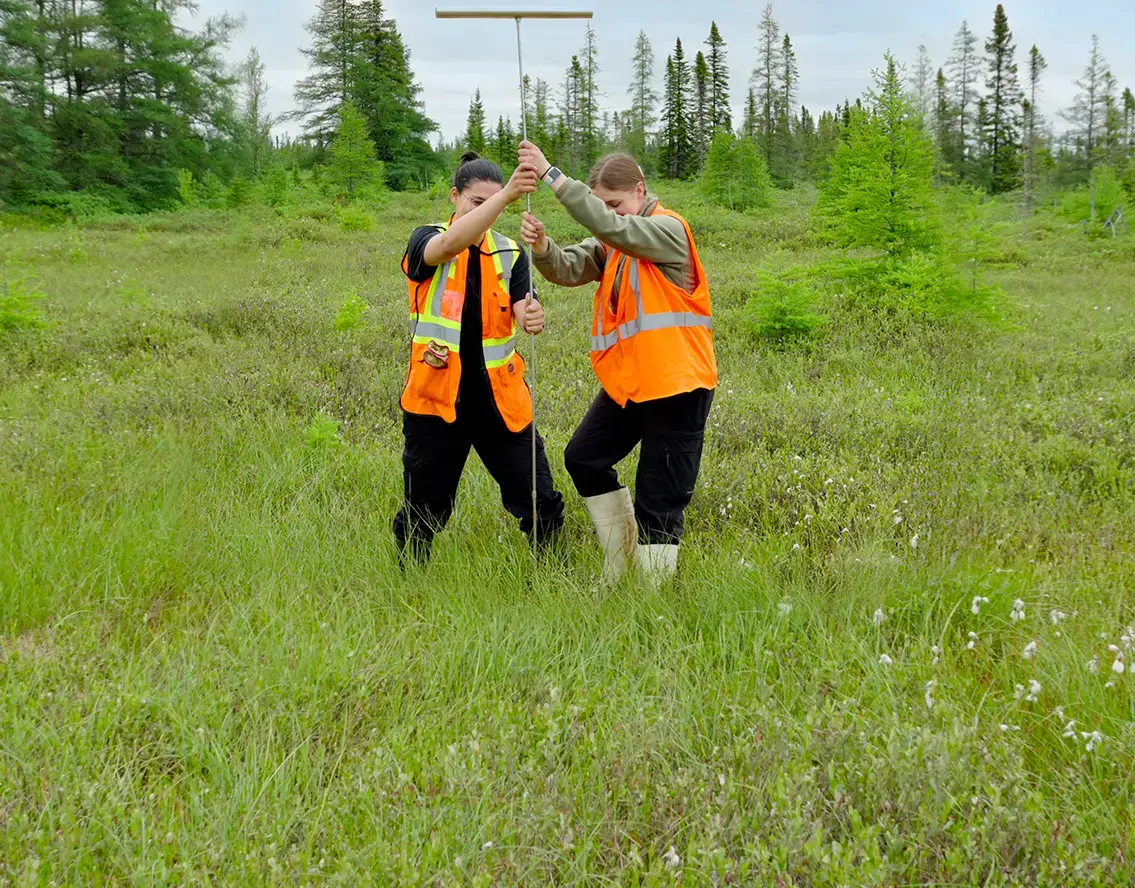
We also closely monitor vegetation recovery, moisture content, wildlife dynamics and carbon stability over several years.

These restoration and GHG reduction targets rely on robust action plans designed to fulfill our ambitions. It is with determination, confidence, and commitment that we take on this new stage.

*This story is from the Premier Tech Report 2025.

Read the complete 2025 sustainability report

Over the past year, Premier Tech signed the United Nations Global Compact, marking a new milestone in its ongoing journey toward Sustainability and beyond. This report highlights the progress, results, and stories that shaped our sustainability efforts throughout the year.